A Kathmandu to Upper Mustang by Jeep journey is one of the best ways to explore the remote landscapes, ancient villages, and Tibetan-influenced culture of northern Nepal. Unlike many other parts of the country, Upper Mustang has a dry, desert-like landscape surrounded by dramatic Himalayan peaks, deep gorges, colorful cliffs, and centuries-old monasteries.
Traveling by private jeep gives you the flexibility to explore this remote region at your own pace. You can stop at viewpoints, take photographs, visit villages, and spend more time at places that interest you without being tied to a public transport schedule.
The journey takes you from Kathmandu through Pokhara and the Kali Gandaki Valley before reaching Kagbeni, the gateway to Upper Mustang, and eventually Lo Manthang, the historic walled city. This guide covers the route, itinerary, driving times, road conditions, permits, costs, vehicle options, and practical tips for planning your Upper Mustang road trip.
Quick Trip Overview
| Travel Information | Details |
|---|---|
| Starting Point | Kathmandu |
| Main Destination | Lo Manthang, Upper Mustang |
| End Point | Kathmandu |
| Recommended Duration | 8–10 days |
| Maximum Altitude | Around 3,840 m at Lo Manthang |
| Best Season | March–May and September–November |
| Travel Type | Private Jeep/4WD with Driver |
| Difficulty | Moderate due to rough mountain roads and altitude |
| Accommodation | Hotels, guesthouses and lodges |
| Suitable For | Couples, families, groups and older travelers |
Why Choose a Jeep for Upper Mustang?
A jeep is one of the most practical ways to explore Upper Mustang. The region is remote, and many sections of the road are rough, dusty, narrow, and unpaved. A private 4WD vehicle provides greater comfort and flexibility compared with traveling by public transportation.
Comfort and Time Savings
A jeep allows you to cover long distances more efficiently than trekking. You can reach remote villages and viewpoints without spending several hours walking between settlements.
For travelers with limited time, a private vehicle also makes it easier to combine Kathmandu, Pokhara, and Upper Mustang into one road trip.
Freedom to Stop Along the Way
One of the biggest advantages of a private jeep is flexibility. You can stop for photographs, meals, short walks, viewpoints, monasteries, and local villages whenever you want.
The road through the Kali Gandaki Valley is filled with changing landscapes, so having your own vehicle allows you to enjoy the journey rather than simply focusing on reaching the destination.
Private Vehicle Instead of Public Transport
Public transportation can be less predictable in remote mountain areas. A private jeep provides more control over your departure time, stops, route, and travel companions.
It is especially useful for families and groups who want to travel together in the same vehicle.
Local Driver Knowledge
An experienced local driver is an important part of an Upper Mustang road trip. Mountain roads can be narrow and rough, and weather conditions can change quickly.
A local driver knows the road, understands the terrain, and can adjust the journey according to road conditions and local circumstances.
Jeep vs Flight
Flying to Jomsom is faster, but you miss much of the overland experience. A jeep journey lets you see the landscape gradually change from the green hills around Pokhara to the dry, high-altitude landscape of Mustang.
You can also stop at places such as Marpha, Tukuche, Kagbeni, Muktinath, and other villages along the route.
Kathmandu to Upper Mustang Route Overview
The main road route is:
Kathmandu → Pokhara → Tatopani → Marpha → Jomsom → Kagbeni → Chele → Ghami → Tsarang → Lo Manthang
After exploring Lo Manthang and Upper Mustang, the return journey generally follows the same road back toward Jomsom, Pokhara, and Kathmandu.
The total road distance depends on the exact route and side trips, but the journey involves several hundred kilometers of mountain roads. Driving time can vary significantly because road conditions, weather, traffic, and stops all affect the journey.
The road becomes increasingly rugged after entering the Mustang region. Around the Kali Gandaki Valley, travelers encounter dusty tracks, river crossings, rocky sections, narrow mountain roads, and steep landscapes.
Road conditions can change from season to season, so the actual driving time should always be treated as an estimate.
Highlights Along the Way
Marpha
Marpha is one of Mustang’s most attractive villages. Its traditional whitewashed houses, stone-paved streets, apple orchards, and local apple products make it a popular stop on the journey.
Muktinath Temple
Muktinath is a sacred pilgrimage destination located at a high altitude. The site is important to both Hindu and Buddhist visitors and offers impressive views of the surrounding mountains.
Kali Gandaki Gorge
The Kali Gandaki Valley provides some of the most dramatic scenery on the route. The road follows the river through a landscape surrounded by massive Himalayan peaks.
Monasteries of Upper Mustang
Upper Mustang has a rich Buddhist heritage. Jampa, Thubchen, and Chhode monasteries are among the important cultural sites around Lo Manthang.
Himalayan Mountain Views
The journey offers views of some of the region’s major mountains, including Annapurna, Dhaulagiri, and Nilgiri. The combination of high mountains and dry desert-like valleys makes Mustang different from many other destinations in Nepal.
Best Time to Travel to Upper Mustang by Jeep
The best time for an Upper Mustang Jeep Tour is generally during spring and autumn, particularly from March to May and September to November.
Spring brings relatively stable weather, pleasant daytime temperatures, and clear mountain views. Autumn usually provides some of the clearest skies after the monsoon season.
March to May
Spring is a good season for road travel. Temperatures are generally comfortable during the day, while mornings and nights can still be cold at higher elevations.
June to August
Upper Mustang lies in the rain shadow of the Himalayas, so it receives less monsoon rainfall than many other parts of Nepal. However, the roads leading toward Mustang can still be affected by rain, landslides, and muddy conditions, particularly at lower elevations.
September to November
Autumn is one of the best periods for an Upper Mustang road trip. The weather is generally dry and clear, making it suitable for mountain views and road travel.
December to February
Winter brings very cold temperatures and possible snowfall. Some accommodations and services in Upper Mustang may operate on a limited basis, and road conditions can become challenging.
Always check current road and weather conditions before departure.
Permits and Requirements
Upper Mustang is a restricted area, so travelers need the appropriate permits before entering the region.
The main requirements generally include:
- Restricted Area Permit for Upper Mustang
- Annapurna Conservation Area Permit (ACAP)
- Valid passport and required travel documents
Permit rules and fees can change, so travelers should confirm the latest requirements and fees with the relevant authorities or a registered local travel or vehicle service provider before starting the journey.
Travelers should also be aware that Upper Mustang has specific regulations regarding independent travel and entry into the restricted area.
Choosing the Right Vehicle for Upper Mustang
Choosing the right vehicle is important because the Upper Mustang road can be rough and demanding.
Scorpio
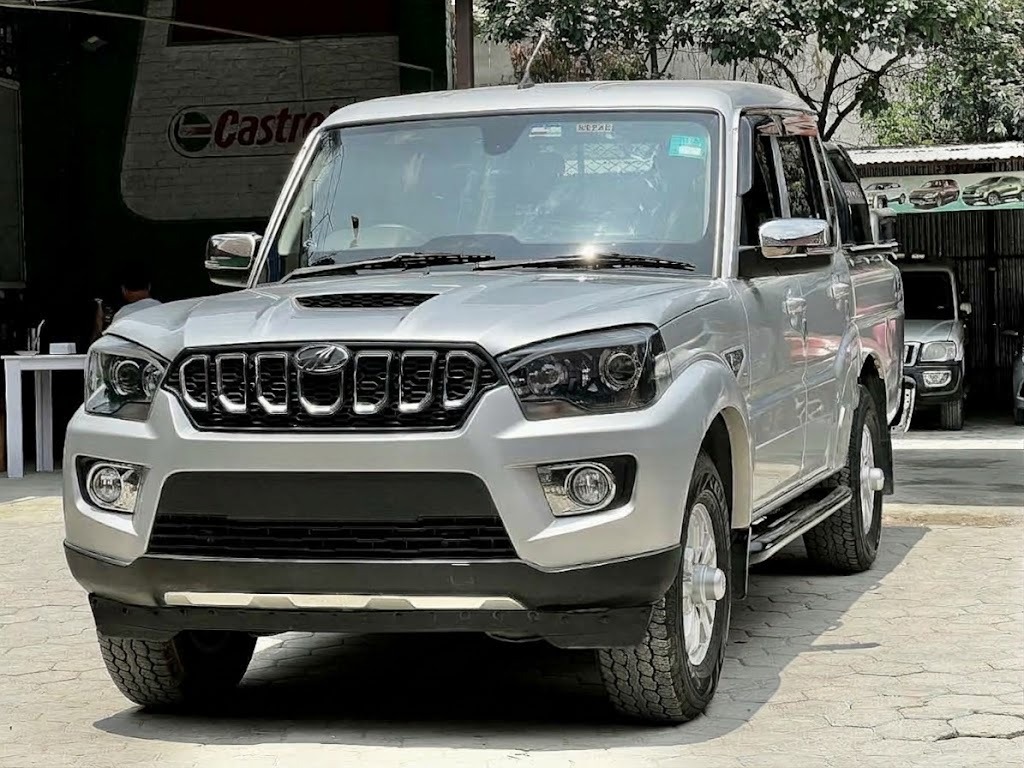
A Mahindra Scorpio is a popular choice for mountain road trips in Nepal. It offers a good balance between passenger capacity, comfort, durability, and rental cost.
It is suitable for small groups looking for a practical and reliable vehicle.
Land Cruiser
A Land Cruiser provides a higher level of comfort and performance, particularly on challenging mountain roads.
It is a good choice for travelers who prioritize comfort and want a premium private vehicle for a longer journey.
Which Vehicle Should You Choose?
For most travelers, a reliable 4WD jeep with an experienced local driver is more important than choosing the most expensive vehicle.
When comparing vehicles, consider:
- Number of passengers
- Amount of luggage
- Road conditions
- Comfort requirements
- Trip duration
- Overall budget